PCP vs lease: what's the difference?

Written by
Joe Towner
Reviewed by
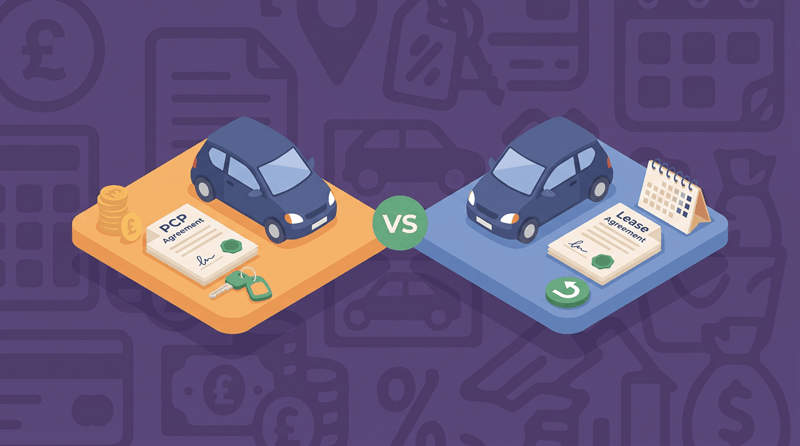
Amy LancashirePCP (personal contract purchase) and leasing (personal contract hire, or PCH) both let you drive a car for a fixed monthly payment, but they're different types of agreement. PCP is finance to buy a car, with an optional final payment at the end if you want to keep it. Leasing is long-term rental. You never own the car, and you hand it back when the lease ends. That difference affects more than ownership. It changes what you pay upfront, what's included and your legal rights if you need to end the agreement early. This guide compares the two side by side. If you're new to the options, start with how car finance works.
PCP vs leasing at a glance
PCP | Leasing (PCH) | |
|---|---|---|
What it is | Finance to buy a car, with an optional final payment | Long-term rental of a car |
Who owns the car | The finance company, until you've paid everything, including the final payment | The leasing company, throughout |
Upfront payment | A deposit, which reduces what you borrow | An initial rental, usually a set number of monthly rentals paid in advance |
Monthly payments | Cover the difference between the car's price and its guaranteed future value, plus interest | Fixed rentals set by the leasing company |
At the end | Make the final payment and keep the car, hand it back or part-exchange it | Hand the car back |
Mileage limit | Yes, agreed at the start | Yes, agreed at the start |
End-of-agreement charges | Excess mileage and damage, if you hand the car back | Excess mileage and damage |
Ending early | Legal right to hand the car back through voluntary termination, or settle early | No legal right for most car leases, and an early termination charge usually applies |
Road tax | You pay it | Usually included |
Credit check | Yes | Yes |
Type of agreement | Regulated credit agreement | Regulated consumer hire agreement |
How does PCP work?
With personal contract purchase, you usually pay a deposit, then monthly payments over a set term. At the start, the lender sets a guaranteed minimum future value (GMFV), which is what it expects the car to be worth at the end. Your monthly payments cover the difference between the car's price, less your deposit, and the GMFV, plus interest. That's why they're usually lower than with hire purchase on the same car.
At the end, you have 3 options:
Keep the car: make the optional final payment, which is based on the GMFV
Hand it back: return the car with nothing more to pay, apart from any excess mileage or damage charges
Part-exchange it: if the car's worth more than the final payment, you can put the difference, called equity, towards your next car
Because the lender guarantees the future value, it takes the risk if the car's worth less than expected at the end. PCP is a form of hire purchase, so it's a regulated credit agreement. Find out more about how PCP works.
How does car leasing work?
With a personal lease, the leasing company owns the car and rents it to you for a fixed term, often 2 to 4 years. You never own it, and you hand it back at the end.
What you pay is usually made up of:
An initial rental: paid at the start and usually set as a multiple of the monthly rental, such as 3, 6 or 9 months. A bigger initial rental usually means lower monthly rentals.
Monthly rentals: fixed for the length of the lease
Fees: some leases have an arrangement or admin fee
Road tax is usually included for the length of the lease, although some leasing companies pass on any increases. Some also offer a maintenance package that covers servicing and some repairs, usually for an extra monthly cost. Insurance usually isn't included, so you'll normally need to arrange your own fully comprehensive cover. A few leasing companies offer it as an optional extra. VAT is charged on lease rentals, and ads for personal leases must show prices including it.
You agree a mileage allowance at the start, and the car's checked for excess mileage and damage when it goes back. A personal lease is a consumer hire agreement under the Consumer Credit Act 1974. That's a different legal category from PCP, and it affects your rights if you want to end the agreement early.
What are the main differences between PCP and leasing?
Owning the car at the end
This is the biggest difference. With PCP, you can buy the car by making the optional final payment. With a lease, you can't. An agreement that gives you the option to buy counts as hire purchase rather than hire, so a lease doesn't include one. Of the two, only PCP lets you decide at the end whether to keep the car.
Upfront and monthly costs
Monthly payments on PCP and leasing can look similar, because both are based mainly on how much value the car is expected to lose over the term, rather than its full price. With PCP, the monthly cost also depends on your deposit, the interest rate and the GMFV. With a lease, it depends on the initial rental, the mileage allowance, the length of the lease and the leasing company's own pricing.
The upfront payments work differently too. A PCP deposit reduces the amount you borrow, and some deals ask for a small deposit or none at all. A lease's initial rental is rent paid in advance. It lowers your later rentals, but it doesn't reduce a loan balance or count towards owning anything.
Ending the agreement early
This is where PCP and leasing are treated very differently by law.
With PCP, the Consumer Credit Act gives you the right to end the agreement at any time before the final payment is due, by writing to your lender, and handing the car back. This is called voluntary termination. If you've paid less than half the total amount payable, including your deposit, you'll need to pay the difference up to that halfway point, unless your agreement asks for less. The total includes the optional final payment, so reaching halfway can take longer than you'd expect. You may also have to pay for damage if you haven't taken reasonable care of the car.
You also have the right to pay off a PCP early. Your lender must give you a settlement figure if you ask for one. This is the amount needed to clear the agreement, including the final payment and any option to purchase fee. Once it's paid, you own the car and can keep it or sell it. Read more about selling a car that's still on finance.
With a lease, the Consumer Credit Act does give you a right to end a hire agreement by giving notice, but the agreement can't end until at least 18 months after it was made. The right doesn't apply if your payments add up to more than £1,500 in any year, which is £125 a month. Most car leases cost more than that, so in practice this right rarely applies. Instead, ending a lease early depends on the terms of your agreement. Leasing companies usually charge an early termination fee, which could be 40% to 50% of the rental payments you have left to pay. You can ask your leasing company for a quote.
Mileage and condition
Both agreements set a mileage limit at the start, usually as an annual allowance. If you go over it, you'll pay an excess mileage charge for every extra mile. A higher allowance usually means higher monthly payments.
Both also expect the car back in good condition, allowing for normal use. Many finance and leasing companies use the BVRLA fair wear and tear standard to judge this. It treats deterioration from normal use as fair wear and tear, and anything caused by impact or careless use as damage, which you can be charged for. The difference is that with PCP, these charges only apply if you hand the car back. If you make the final payment and keep it, they don't apply, though high mileage or damage will lower the car's value if you part-exchange it. With a lease, the car always goes back, so they always apply.
Credit checks
You'll have a credit check for both. For PCP, the lender must assess your creditworthiness, including whether you can afford the repayments. Leasing companies usually run credit and affordability checks too. Both usually show on your credit file, so paying on time helps your credit history and missed payments can harm it.
PCP vs. Lease FAQs
There are a range of financial products available that may suit your needs. We encourage you to research your options carefully and consider seeking independent financial advice before making any decisions. This blog is for informational purposes only and does not constitute financial advice.