The Cost of Bad Advice


Written by
Emily TyeManaging finances has become increasingly complex, with many people navigating rising living costs and an ever-expanding range of advice sources, from traditional experts to social media creators and AI tools. But with so many places to turn, knowing which guidance to trust is not always straightforward.
In this guide, the credit card experts here at Zable surveyed 2,000 UK credit card holders to explore where people are seeking financial advice and identify the financial areas where non-regulated guidance is most common.
With AI tools becoming increasingly prevalent in everyday financial decision-making, we also conducted our own assessment of the reliability of popular platforms when it comes to financial advice. Responses from four major AI tools were assessed on the accuracy and relevance of the guidance they provided to UK consumers across a range of personal finance topics. We also examined how confident people feel in verifying the advice they receive, and whether consumers are taking steps to assess the risks before acting on financial information.
Alongside this, we explored the financial impact of bad advice by asking respondents to self-report how much they believed poor financial guidance had cost them in the past 12 months.
Brits are increasingly turning to unregulated sources for financial advice
We asked respondents where they turn for financial advice across a range of everyday money topics, including saving, credit cards, investing, and mortgages. Answers ranged from regulated professionals such as financial advisers and accountants to informal sources, including friends, family, and online platforms.
Across the board, our research found that 83% of people seek financial guidance from non-regulated sources, revealing just how common it is for consumers to rely on advice outside of traditional professional channels.
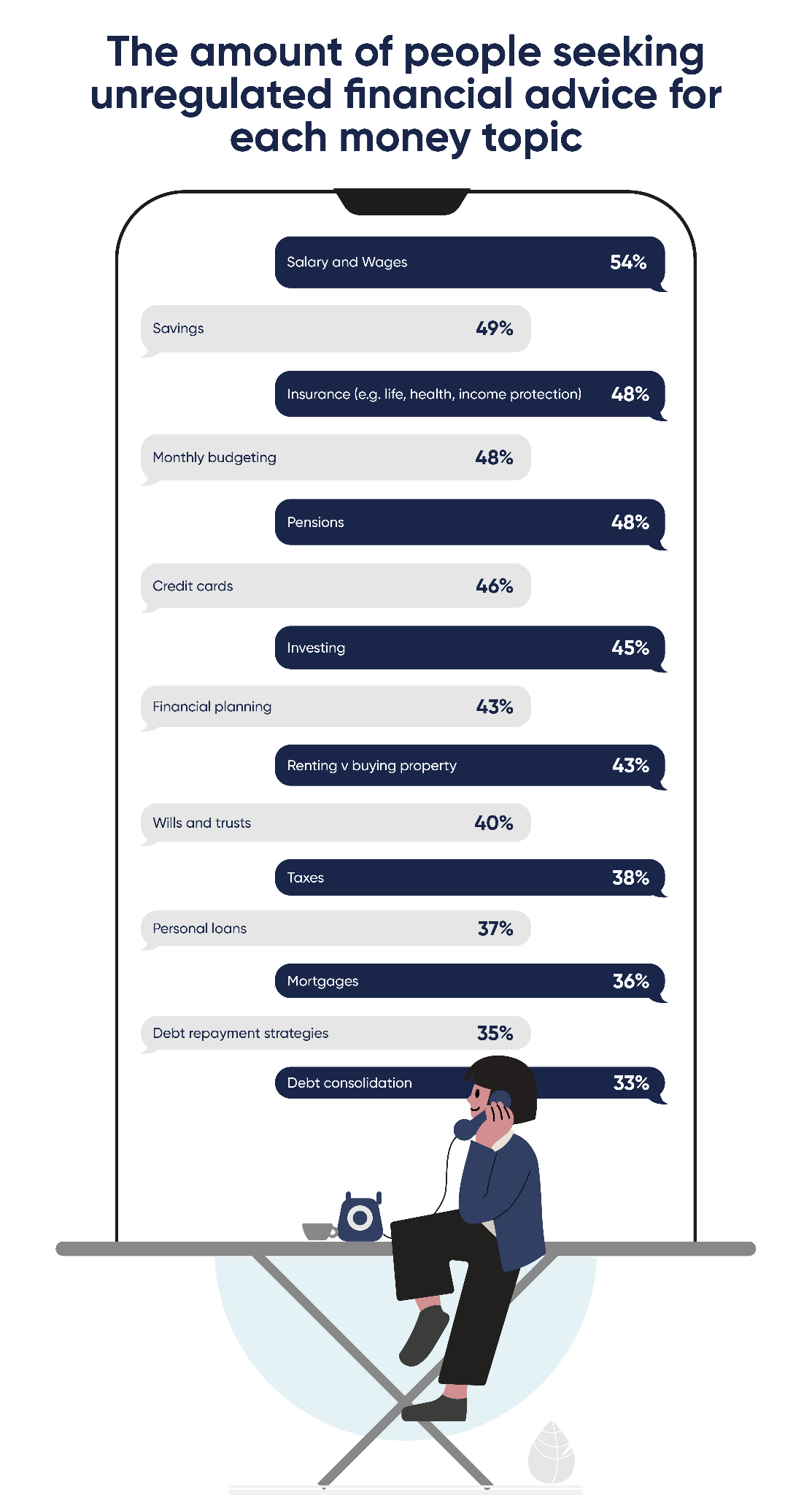
When broken down by financial topic, reliance on unregulated advice remains consistently high. It's most common for advice on salary and wages (54%), savings (49%), insurance, monthly budgeting, pensions (48%), and credit cards (46%).
Even in more complex areas such as investing (45%), financial planning (43%), and mortgages (36%), a significant proportion of people are still turning to informal or unregulated sources for guidance.
The survey also revealed that younger adults are significantly more likely to rely on unregulated advice, with 93% of 25-34 year olds and 92% of 35-44 year olds reporting that they have sought financial guidance from non-regulated sources across a range of money topics.
For instance, 63% of 25-34 year olds reported having sought unregulated advice regarding credit cards in the last 12 months, and 60% of 35-44 year olds have sought unregulated advice in relation to pensions.
At this point in their financial lives, many in these age groups are often balancing multiple financial pressures, including long-term commitments such as mortgages and family planning. As a result, these groups are turning to more accessible, informal sources of guidance, including AI tools and social media, rather than relying solely on traditional regulated advice.
Debunking unregulated financial advice sources
As financial decision-making increasingly moves online, more people are turning away from traditional regulated sources and towards unregulated forms of guidance. From social media content and online forums to AI tools, financial advice is now widely available to access online, often with little oversight or accountability.
With our survey finding that around one in 10 credit card holders are already using AI tools for financial guidance, and this increasing to around one in six in the 25-34 age bracket, we put the reliability of these tools to the test.
Testing the quality of AI-generated financial advice
We asked four major AI tools - Gemini, Grok, ChatGPT, and Claude - nine common personal finance questions covering topics such as financial planning, investing, and insurance. Emily Tye, Senior Content Manager at Zable, then assessed each response for accuracy and relevance to a UK audience, awarding either a pass or fail, and identified common gaps in each response.
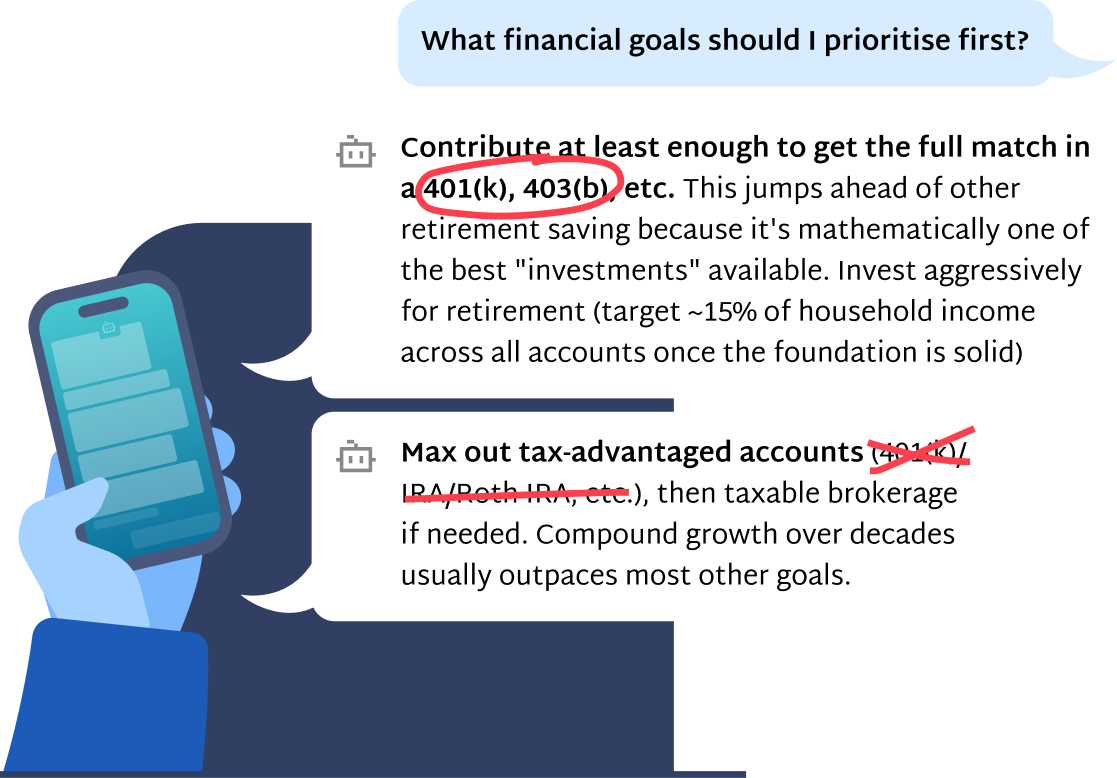
The results were weak across the board, with most tools defaulting to US-focused advice, including references to 401(k)s, FDIC insurance, and American savings guidance that does not apply to UK consumers. Claude performed best overall with six passes, although some responses still included outdated UK information. Grok performed the worst, not achieving a pass in any of the nine questions, while ChatGPT achieved two passes and Gemini three.
Overall, our findings suggest that while AI can offer a useful starting point, UK consumers should not rely on these tools for financial advice without independently verifying the information provided.
Over two-thirds won’t check the risks involved before acting on financial advice
Despite growing access to financial advice online, many consumers are failing to properly verify the information they receive before acting on it. For instance, over two-thirds (68%) of Brits don’t check the risks involved before acting on financial advice, while the same proportion (68%) say they would not compare financial advice they’d been given against trustworthy sources, such as government websites or consumer guidance platforms.
Furthermore, just 24% said they would check a financial professional’s credentials before following advice, while only 22% would investigate whether the guidance may be influenced by commissions, sponsorships, or other conflicts of interest.
This is particularly concerning in the age of “finfluencers”, where financial content on platforms such as TikTok, Instagram, and YouTube can quickly reach millions of users. Financial advice on social media is often delivered in short, engaging formats that can make complex topics appear simpler or lower risk than they really are, particularly for younger audiences with less financial experience.
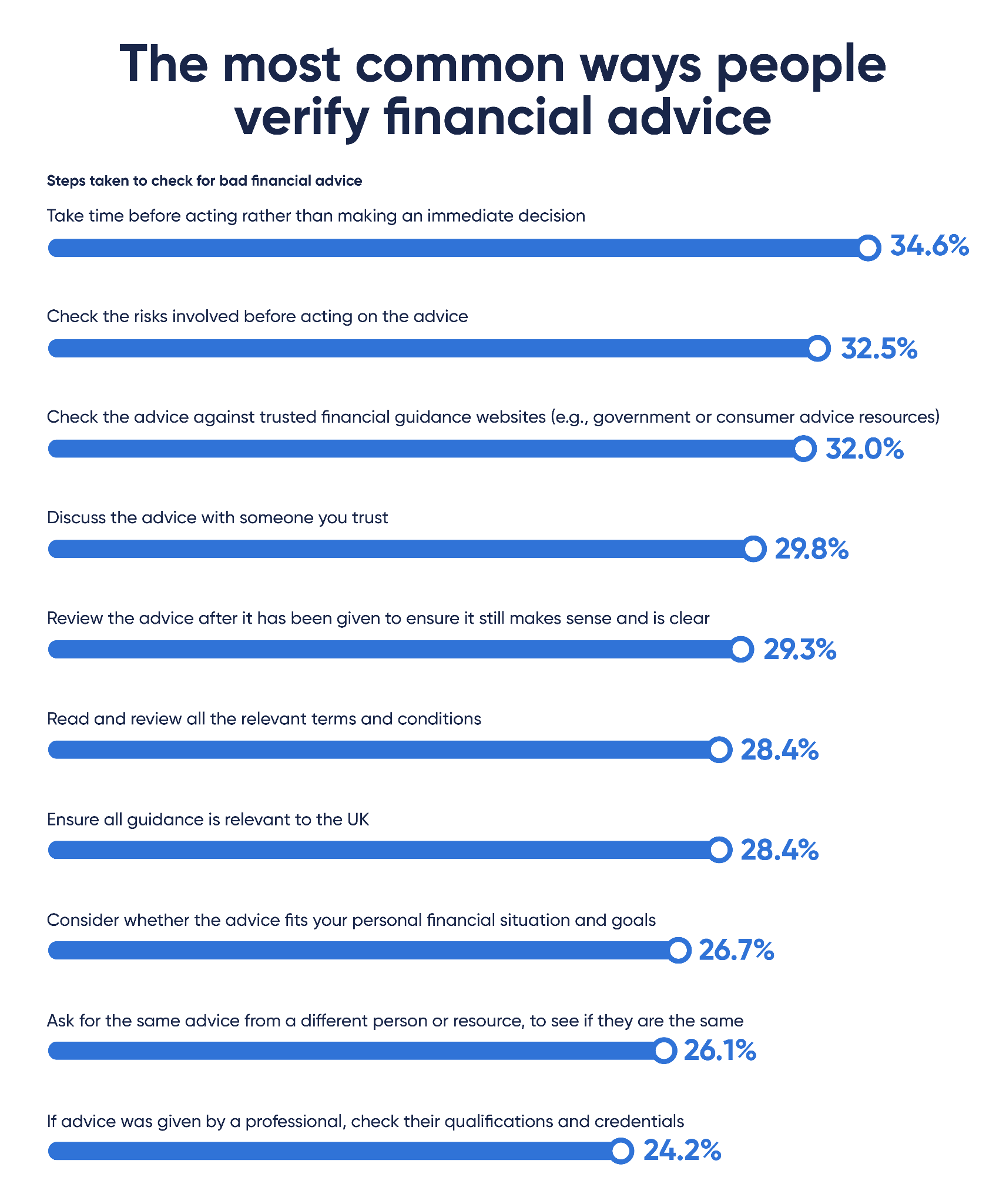
The data also reveals a wider lack of scrutiny around financial information more generally, with 72% of respondents not fully reading terms and conditions before acting on financial products or advice. In a world where online financial guidance is becoming increasingly accessible and influential, these findings highlight the importance of consumers being able to critically assess the information they are given and understand the potential risks before making financial decisions.
How much is bad financial advice costing people?
When financial advice is inaccurate or poorly suited to someone’s situation, the financial impact can be significant. To understand this, we asked credit card holders to estimate how much, if anything, bad financial advice had cost them in the past 12 months across a range of financial areas.
Almost a third (29%) of credit card holders, equivalent to over 10 million people, said they had lost money through bad advice given in relation to credit cards, with 21% (nearly 7.5 million) reporting losses of £100 or more in the past 12 months. This suggests that when things go wrong in these areas, the financial impact can quickly escalate beyond smaller, incidental losses.
Similarly, 28% have reported losses as a result of bad investing advice, with 22% losing £100 or more, and £100-£500 also being the most common range.
A similar pattern is seen for mortgages, where the most common price point increases further to £500-£1,000, reflecting the higher stakes and long-term financial commitment involved in property decisions.
Overall, the findings suggest that while everyday financial topics are often seen as lower-cost or self-managed, people are more likely to invest in paid advice when it comes to higher-value or longer-term financial decisions.
Where to seek financial advice, and how to check its reliability
With so many sources of financial guidance now available, from social media creators to AI chatbots, it can be difficult to know where to turn for reliable advice. While not all financial decisions require professional support, it’s important to understand where trustworthy advice comes from and how to assess whether the information you’re receiving is credible and appropriate for your personal circumstances.
Arielle Rogers-Jenkins, Senior Product Manager (UK Credit Cards) at Zable, provides guidance for where to seek reliable financial advice and how to ensure it's right for you.
1. Take advantage of free and low-cost guidance services
There is an important middle ground between paying for a regulated financial adviser and relying on informal online content. Several free, authoritative services exist specifically to help people in the UK navigate financial decisions, for example:
MoneyHelper: Backed by the government and covers budgeting, debt, pensions, and more
Which? Consumer Advice: Independent guidance on financial products, scams, and consumer protection
Citizens Advice: Offers free, impartial guidance on debt, benefits, and consumer rights
2. Start with regulated or official sources
In the UK, regulated financial professionals must meet specific standards and are accountable for the advice they provide, making them more reliable than informal online sources. Government and public guidance platforms can also provide trustworthy information on topics such as taxes, pensions, borrowing, and consumer rights.
For important financial decisions, regulated organisations should be the first point of reference. This includes financial advisers, banks, building societies, accountants, mortgage brokers, and official consumer guidance services.
3. Use financial advisers for personalised support
If you are making complex decisions around investing, pensions, mortgages, debt, or long-term financial planning, speaking to a qualified financial adviser can help ensure the advice is tailored to your circumstances.
Before proceeding, check whether the adviser is authorised by the (FCA). You can do this by searching the FCA Register, where you can look up an adviser or firm by name and verify their Financial Reference Number (FRN). A regulated adviser should also be transparent about their qualifications, fees, and the scope of advice they provide. If you’re dealing with a business, you can also check the company on Companies House to confirm it’s a legitimate, registered organisation.
4. Treat online advice as an education tool, not a final answer
AI tools, forums, YouTube videos, podcasts, and social media can all be useful for learning basic financial concepts or researching options. However, this type of content is often generalised and may not reflect UK regulations or your personal financial situation.
When seeking advice online, be mindful that authors or content creators may benefit financially through sponsorships, affiliate links, commissions, or product promotions. If advice appears heavily sales-driven or promises guaranteed results, it should be treated with caution.
Online information should be used to build understanding rather than make final decisions, with key details checked against more reliable or regulated sources.
5. Trust your instincts, and know it's always okay to ask more questions
Even when dealing with regulated professionals, you are entitled to ask questions, request clarification, and take time to think before making any decision. If something does not feel right or if you are unsure whether advice is genuinely in your best interest, seeking a second opinion is always a reasonable step.
Good financial advice should leave you feeling informed and in control, not pressured, confused or rushed. If you’re feeling the latter, this is a good signal to pause and look elsewhere.
Sources and methodology
Methodology summary:
This report is based on a survey of 2,001 UK credit card holders, conducted to understand how people access, use, and evaluate financial advice.
All percentage figures are based on survey responses unless otherwise stated. Monetary values represent self-reported costs among respondents who indicated they had received bad advice in each area.
We also analysed four AI tools - Gemini, Grok, ChatGPT, and Claude - testing their reliability when it comes to financial advice. We asked them nine common personal finance questions covering financial planning, investing, and insurance topics. Using our internal expertise at Zable, we then assessed each response for accuracy and relevance to a UK audience, awarding either a pass or fail mark.