What is HP finance? Hire purchase explained

Written by
Joe Towner
Reviewed by
Amy LancashireHP, or hire purchase, is a way of paying for a car in instalments. You usually pay a deposit, then fixed monthly payments that cover the rest of the car's price plus interest. Once you've made every payment, including any ‘option to purchase’ fee, the car is yours. Unlike Personal Contract Purchase (PCP), there's no large final payment at the end. HP is the second most commonly held type of car finance after PCP, according to consumer research published by the FCA in September 2025 that interviewed 5000 car owners. This guide explains how HP works, what it costs, what your rights are and what happens if you can't keep up with payments. If you're new to the options, start with how car finance works.
What does HP stand for?
HP stands for hire purchase. As the name suggests, you hire the car from the lender while you pay for it, with the option to buy it at the end. The lender owns the car until you've made all your payments, so you can't sell it without the lender's permission.
You'll usually be the registered keeper, so the V5C logbook will be in your name. But the V5C isn't proof of ownership, so being the registered keeper isn't the same as owning the car.
That's also different from a secured loan, where the lender holds security over something you own, usually your home. Find out more about how a secured loan works.
How does HP work?
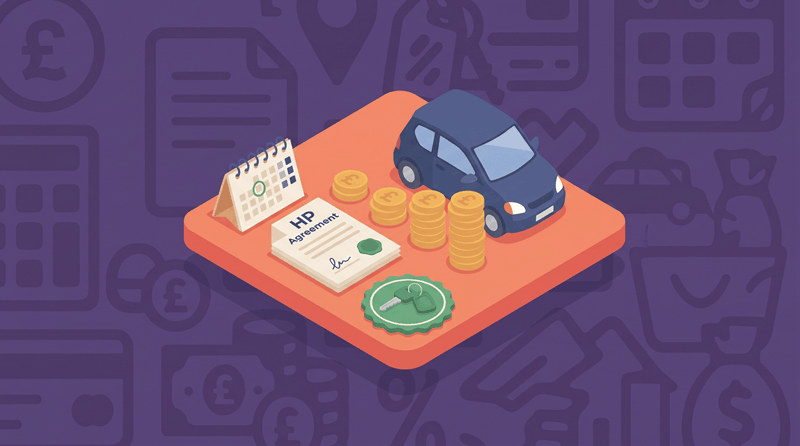
An HP agreement usually has 3 parts: a deposit, monthly payments and an option to purchase fee at the end.
The deposit
You usually pay a deposit at the start. The bigger it is, the less you borrow, which lowers your monthly payments and the total interest you pay. Some lenders offer HP with a small deposit or none at all. If you have a car to part-exchange, its value can go towards your deposit.
Your monthly payments
You then make monthly payments over a set term, usually between 1 and 5 years. The payments cover the car's price, less your deposit, plus interest. They're usually fixed, so you pay the same amount each month.
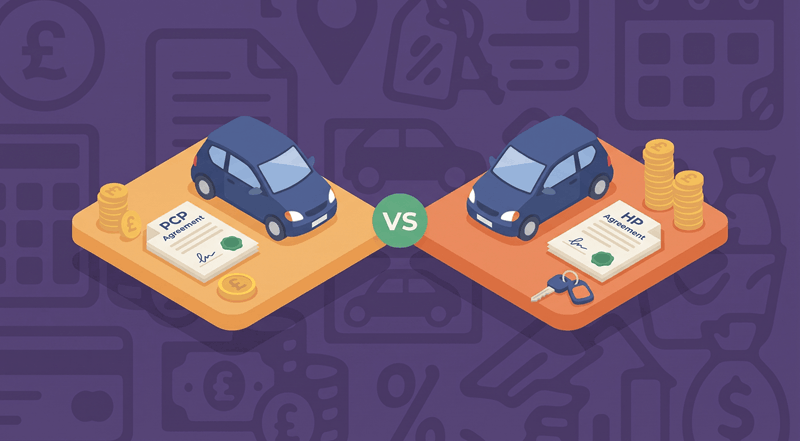
Because you're paying off the car's full value, your monthly payments will usually be higher than with PCP on the same car over the same term.
The option to purchase fee
Most HP agreements include an option to purchase fee. This is typically a small fee that transfers ownership of the car to you, and it's usually paid with your final monthly payment. The amount varies between lenders, and some also charge a fee at the start of the agreement. Your agreement will show which fees you'll pay and when.
What happens at the end of an HP agreement?
Once you've made your last payment, including any option to purchase fee, the car's yours to keep, sell or part-exchange.
Because you'll own the car at the end, HP deals usually don't have a mileage limit or charges for wear and tear. These charges can apply if you end the agreement early and hand the car back. High mileage will still lower the car's value if you sell it later.
How much does HP cost?
Apart from the car's price and your deposit, what you pay overall depends on:
The term: a longer term lowers your monthly payments, but usually means paying more interest overall
The APR: this is the yearly cost of borrowing, including interest and any compulsory fees. A lower APR means you pay less, and the APR you're offered depends partly on your credit history
Fees: such as the option to purchase fee.
Your agreement must show the total amount payable. This is what you'll pay in total if you make every payment on time, including your deposit, interest and fees. It's a useful way to compare deals alongside the APR, as long as the deposits and terms are similar.
What are my rights with HP?
HP agreements for personal use are usually regulated by the Consumer Credit Act 1974 and FCA rules, which give you some important rights.
You can withdraw within 14 days
You can withdraw from the agreement within 14 days without giving a reason. The 14 days start the day after the agreement's made or the day after you receive your copy of it, whichever is later. You can do this by phone or in writing, as set out in your agreement. This right doesn't apply if you're borrowing more than £60,260.
You can pay off the agreement early
You have the right to pay off your HP agreement early, in full or in part. Your lender must give you a settlement figure if you ask for one. This is the amount needed to clear the agreement, and once it's paid, the car's yours.
Settling early usually means paying less interest overall, because you'll get a rebate on the interest for the rest of the agreement. The rules let your lender work out the rebate as if you'd settled up to a month later. If you're repaying more than £8,000 on a fixed rate, it may also charge up to 1% of the amount you repay. Any of this will be included in your settlement figure.
You can end the agreement and hand the car back
This is called voluntary termination. You can end an HP agreement at any time before the final payment is due, by telling your lender in writing, and return the car. If you've paid less than half the total amount payable, including your deposit, you'll need to pay the difference up to the halfway point, unless your agreement asks for less. If you've already paid half or more, you can hand the car back with nothing more to pay, apart from any missed payments. Either way, you may have to pay for damage if you haven't taken reasonable care of the car.
The car's protected once you've paid a third
Once you've paid at least a third of the total amount payable, the car counts as "protected goods". If you fall behind, your lender can't take it back without a court order, unless you agree at the time. And whatever you've paid, your lender can't enter your home, or any other premises, to take the car without a court order or your permission.
What happens if I can't keep up with payments?
If you're struggling, talk to your lender as soon as you can. Lenders must treat customers in or approaching arrears with forbearance and due consideration. Depending on your circumstances, that could mean accepting lower payments for a while, giving you more time to pay arrears or pausing interest and charges.
If you do fall behind, this is what usually happens:
Arrears letters: once you've fallen behind by the equivalent of 2 payments, your lender must send you a formal notice of arrears within 14 days.
Default notice: before your lender can end the agreement or take the car back, it must send you a default notice, giving you at least 14 days to put things right.
Repossession: if you don't catch up by the date in the notice, the lender may end the agreement and take the car back. If you've paid a third or more of the total amount payable, it needs a court order to do this, unless you agree to it.
A shortfall: a repossessed car is usually sold, often at auction. If the sale doesn't cover what you owe, you may have to pay the difference.
Missed payments will show on your credit file and can make it harder to borrow in future. If you're worried about money, you can find free, confidential debt advice through MoneyHelper's debt advice locator.
Pros and cons of HP
Pros
You own the car once you've made all the payments
There's no large final payment at the end
There's usually no mileage limit or wear and tear charge
Fixed monthly payments can make budgeting easier
You have legal rights to pay off early or hand the car back
Cons
Monthly payments are usually higher than with PCP on the same car
You can't sell the car without the lender's permission until you've settled the agreement
Cars lose value, so yours could be worth less than you still owe, especially early in the agreement or if it's new
If you can't keep up with payments, the lender could take the car back
Is HP right for me?
HP can work well if you want to own the car at the end, plan to keep it for a long time or drive a lot of miles. Because monthly payments are usually higher than with PCP, it may be less suitable if keeping monthly costs down is your priority or you like to change your car every few years. In that case, find out how PCP works.
The right choice depends on your own circumstances. You can also compare personal loans vs car finance.
Hire Purchase FAQs
There are a range of financial products available that may suit your needs. We encourage you to research your options carefully and consider seeking independent financial advice before making any decisions. This blog is for informational purposes only and does not constitute financial advice.