The UK’s Credit Confidence Gap


Written by
Emily Tye
Reviewed by
Amy LancashireDespite being one of the UK’s most widely used financial products, credit cards are not always fully understood by consumers. While they can offer flexibility, rewards, and opportunities to build credit history, gaps in knowledge can make it harder for people to use credit confidently and responsibly, increasing the risk of debt, missed repayments and other financial harm.
To explore how well Brits really understand credit cards, we quizzed 2,000 people across the UK on topics including interest rates, repayment terms, credit scores, and borrowing habits. The results reveal a clear gap between confidence and understanding, with many people feeling they were not given enough guidance before making financial decisions. Almost two-thirds (64%) said they would have liked more education about credit and borrowing earlier in life.
This need for clearer education is reflected in everyday experiences with credit. Nearly half (47%) said they find credit card terms and conditions confusing, while 42% have used a credit card without fully understanding the terms they agreed to. Beyond the small print, 22% are also unsure how credit scores are calculated.
We also explored how this confidence gap varies across different groups, identifying where understanding is strongest, where misconceptions remain, and what this means for how people use credit cards day-to-day.
Only 1% of Brits answered all 15 credit card statements correctly
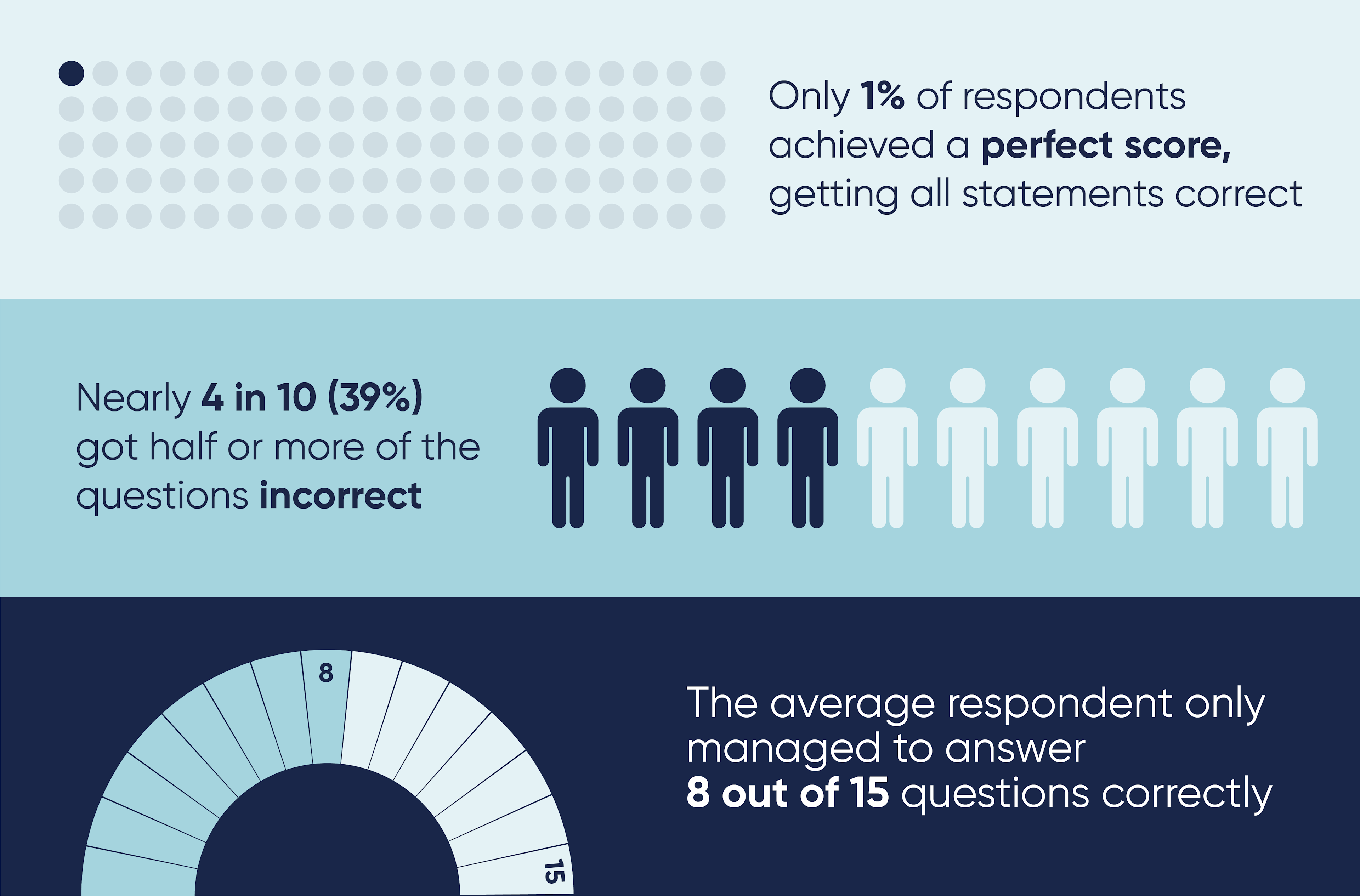
Our credit card quiz challenged 2,000 Britons to separate fact from fiction across 15 true-or-false statements. The results reveal a significant gap in credit card knowledge. Only 1% of respondents achieved a perfect score, getting all statements correct, with nearly 4 in 10 (39%) answering half or more of the questions incorrectly.
When looking at all respondents, the average score was just 53%, with people only managing to answer 8 out of 15 questions correctly.
Brits understand the basics, but struggle with the finer details
The overall results aren’t representative of widespread confusion. Many respondents demonstrated a strong understanding of the basics of credit, with the highest scores on questions about everyday credit card use. More than three-quarters (77%) knew that missing a minimum payment could result in a late payment fee, while three-quarters (75%) understood the impact of missed payments on credit scores and what a credit limit means. However, this still shows a concerning gap in knowledge for a quarter of Brits.
Understanding dropped sharply when the questions moved beyond everyday credit basics. Some of the biggest misconceptions were surrounding what does and doesn’t affect your credit score. Just 28% correctly understood that closing an old, unused credit card doesn’t typically improve it, while 29% understood that income isn’t factored into the calculation at all. Perhaps one of the most concerning findings was that nearly a quarter (23%) incorrectly thought that using up your full credit limit is one of the best ways to improve your credit score over time.
Confusion around fees and interest was just as common. Only 54% were aware that an annual fee is not a penalty for missing a payment, suggesting many people may be mixing up different types of credit card charges. Similarly, 24% thought that you are still charged interest on purchases, even if you pay your full balance by the due date each month. These misunderstandings highlight just how easily the finer details of credit cards can be overlooked.
Commenting on the results, James Goforth, Product Manager at Zable says:
“These misconceptions might seem trivial individually, but they add up to have real financial consequences. Closing an old card may seem like a sensible way to tidy up your finances, but it can shorten your credit history and reduce your overall available credit, both of which can bring your score down rather than improve it.
“Arguably, the most dangerous myth here is the idea that maxing out your limit helps your score, since it’s the opposite of what actually protects your credit. And if people don’t fully understand the difference between an annual fee and a penalty charge, or when interest actually applies, they’re far more likely to be caught out by charges they didn’t see coming.
“The pattern here isn’t that people can’t understand credit, but that many may be lacking clear, accessible information at the moments when they need it most. Credit can be complicated, and without the right guidance, it’s easy for common misconceptions like these to take hold”.
Younger adults are less likely to understand credit cards
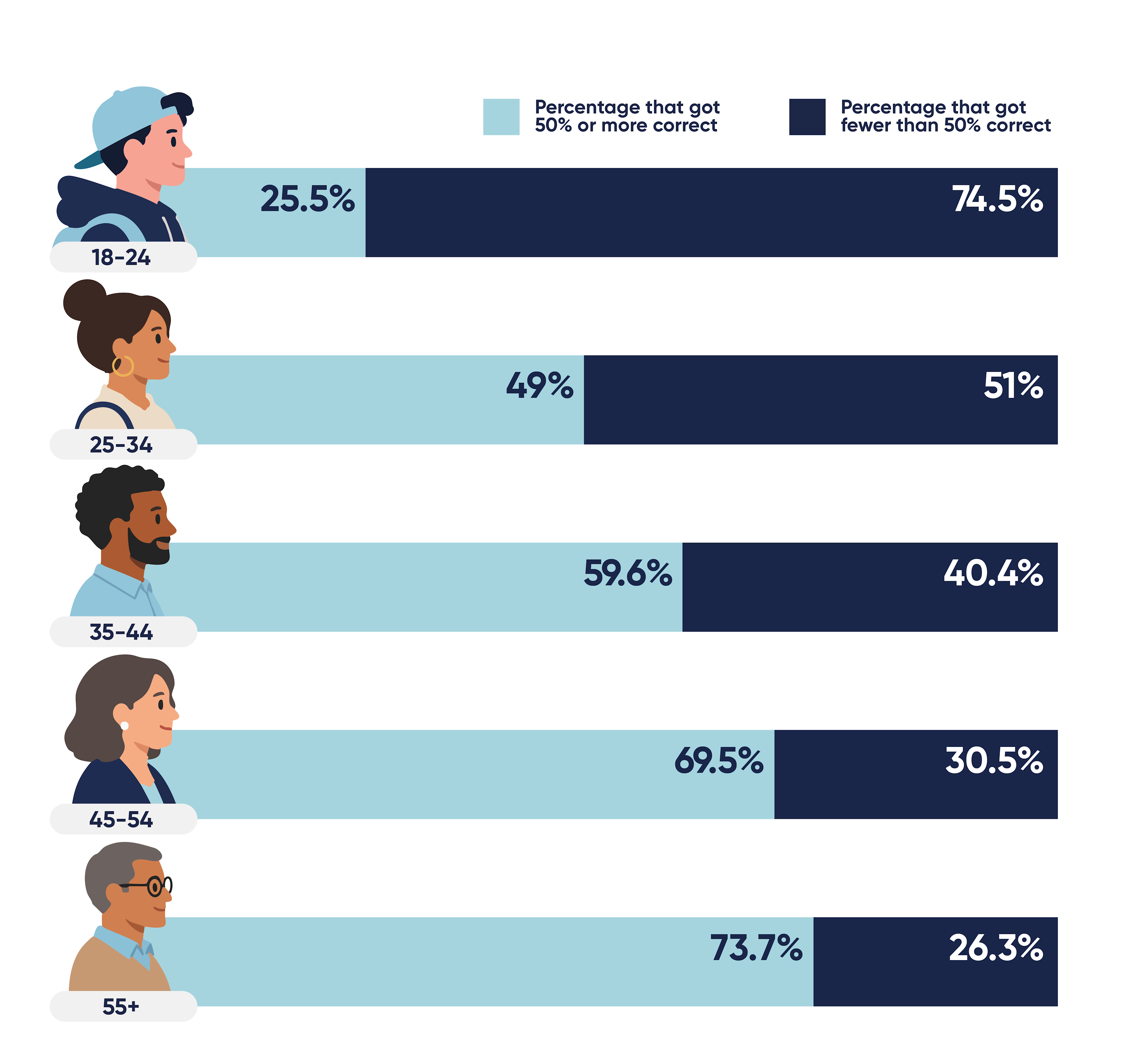
The breakdown of results by age group shows that, as is typical with financial topics, understanding increases steadily with age. The results show that just over a quarter (25.5%) of 18-24-year-olds passed the quiz, compared to 73.7% of those aged 55 and over.
Age group | Percentage that achieved 50% or above | Percentage that got fewer than 50% correct |
|---|---|---|
18-24 | 25.5% | 74.5% |
25-34 | 49.0% | 51% |
35-44 | 59.6% | 40.4% |
45-54 | 69.5% | 30.5% |
55+ | 73.7% | 26.3% |
The pattern climbs steadily with almost every age bracket, nearly tripling from the youngest to the oldest group. This isn’t hugely surprising, as older age groups have simply had more time to build credit histories and encounter these situations firsthand. Notably, 13% of 18-24-year-olds scored zero out of 15 on the quiz, nearly double the rate of any other age group.
James Goforth explains the risks of young people entering credit relationships under-informed:
“Many young people take out their first credit card at a point when they’re still learning how money works in general, and if that first experience with credit goes wrong, it can affect their financial options for years to come. The earlier people understand how credit actually works, the more likely they are to build it up carefully, rather than learning the hard way.”
Those with poor credit history performed below average on the quiz
Perhaps most telling is the link between credit history and quiz performance. We asked respondents to select where they think their credit history sits across a range of statements from ‘very poor’ to ‘great’. 73% of those with ‘great’ credit history passed the quiz, answering half or more of the questions correctly, compared to 56% of those with ‘very poor’ credit history. 27% of people who said they’re unsure of their credit history answered every single question wrong.
This suggests that the people who are struggling with their credit history are also among the least equipped with the knowledge to do so. James Goforth says:
“This correlation matters because it highlights why credit education needs to be targeted, accessible and available when people are most likely to need it. This is particularly important for people looking to access credit with a poor or limited credit history, where understanding the factors that influence credit decisions can help them make more informed choices and avoid further financial setbacks.
“Improving access to clear, practical information at key moments, such as before applying for credit, using a specific credit card for rebuilding poor credit history, or taking steps to improve a credit score, could make a real difference in helping people understand their options and manage credit responsibly.”
Brits are more confident than they are knowledgeable about credit
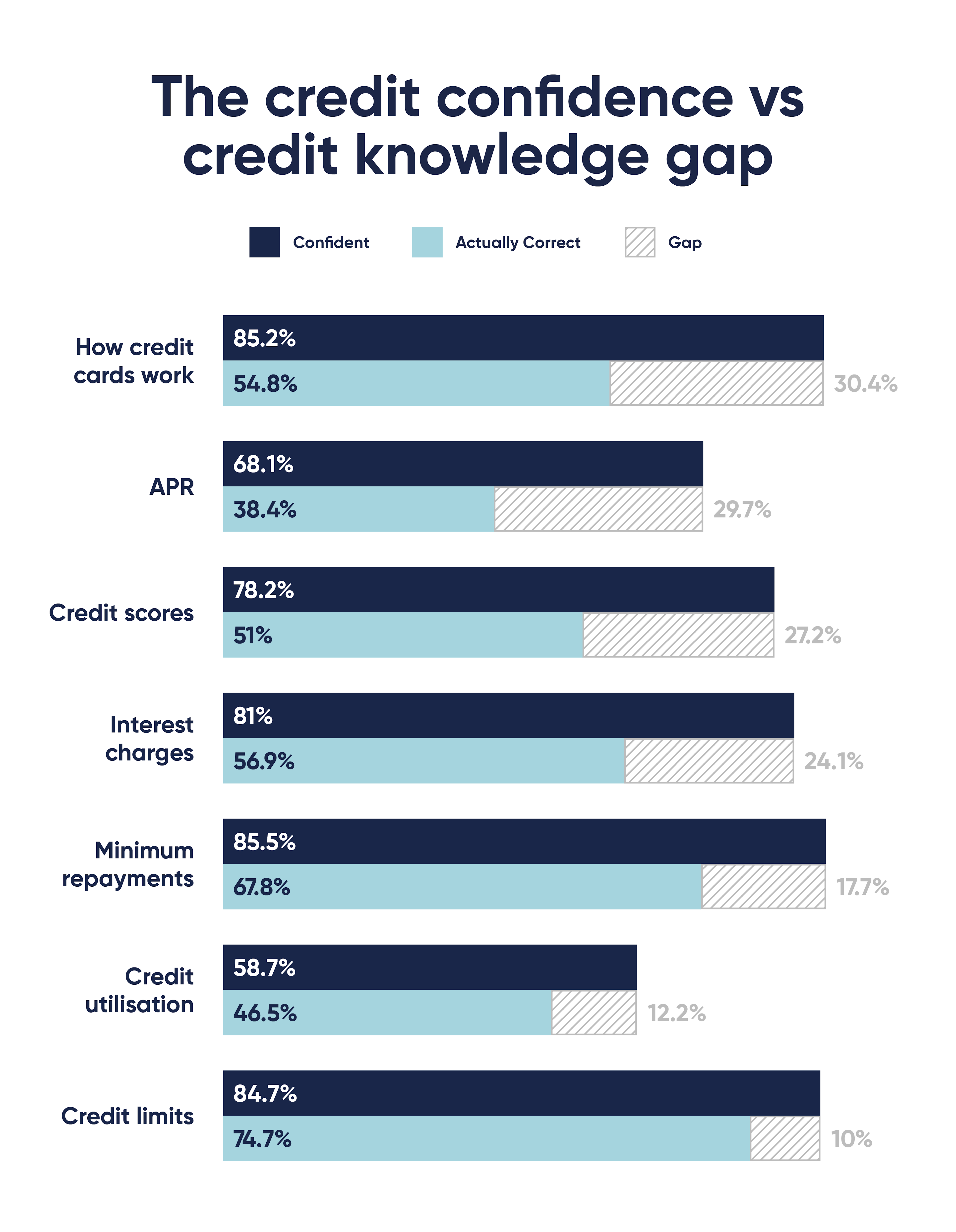
Knowing the facts about credit is one thing, but our survey also asked people how confident they felt about each topic, giving us a way to compare what people think they know with what they actually know. The results reveal a consistent pattern, with confidence outpacing understanding on each topic we tested.
The gap is widest when it comes to the basics. 85% of people said they felt confident understanding how credit cards work, yet only 55% could actually demonstrate that understanding when tested, a gap of 30%. The same disconnect appeared around APR, where 68% felt confident, yet actual understanding fell to 38%, and credit scores, where 78% said they felt confident compared with 51% who answered questions on them correctly.
Topic | Confident | Actually Correct | Gap |
|---|---|---|---|
How credit cards work | 85.2% | 54.8% | 30.4% |
APR | 68.1% | 38.4% | 29.7% |
Credit scores | 78.2% | 51.0% | 27.2% |
Interest charges | 81.0% | 56.9% | 24.1% |
Minimum repayments | 85.5% | 67.8% | 17.7% |
Credit utilisation | 58.7% | 46.5% | 12.2% |
Credit limits | 84.7% | 74.7% | 10.0% |
Interestingly, the smallest confidence gap was found for credit limits. While 84.7% of respondents said they felt confident understanding credit limits, 74.7% were able to answer related questions correctly, leaving a gap of just 10 percentage points. By contrast, credit utilisation had the lowest confidence score overall (58.7%), but it was also one of the least understood topics (46.5% correct), meaning respondents' confidence more closely reflected their actual knowledge.
The larger disconnect occurs with concepts that feel more familiar, such as how credit cards work or APR, where confidence is high but actual understanding falls considerably short.
Younger adults show the largest confidence disconnect
This confidence gap varies significantly by age, with younger respondents showing the largest disconnect between perceived understanding and actual knowledge. While 76.4% of 18-24-year-olds felt confident they understood how credit cards work, fewer than 30% could answer questions on the topic correctly, highlighting a significant gap between confidence and comprehension.
The same disconnect appeared around interest charges. While 88% of respondents aged 55 and over said they felt confident in their understanding, only 69% could demonstrate that knowledge in practice, a gap of 19%. Among 18-24-year-olds, confidence in interest rates was revealed to be high at 71.7%, but correct understanding dropped to just 33.3%, a much wider gap of 38.4%.
Men are more confident about credit, but not always more accurate
Looking at the results by gender, men were more confident than women across every topic tested and generally achieved higher scores on the quiz. However, in some areas, men showed a larger disconnect between perception and understanding compared to women, particularly credit utilisation. Men’s confidence outpaced their knowledge by 19.1%, compared with a gap of just 5.8% among women.
In others, the gap narrowed or reversed. For APR, women showed a slightly larger confidence gap (30.9% vs 28.5% among men), reflecting lower levels of understanding, with only 31.2% answering APR questions correctly compared with 45.9% of men.
James adds:
“A concern highlighted by our findings is confidence that isn’t supported by understanding. When people overestimate their knowledge of credit, they may make financial decisions without fully understanding the potential impact. The findings show that credit knowledge gaps vary by topic and demographic, highlighting the importance of clear, accessible education to help people make informed decisions.”
How to increase credit card knowledge
Understanding how credit cards work is the first step towards using them confidently. While the research highlights clear gaps in knowledge, there are practical steps consumers can take to improve their understanding and make more informed decisions.
Learn the key terms before taking out a credit card
Before applying for a credit card, take time to understand the basics, including APR, minimum repayments, fees, credit limits, and how interest is charged. You can check out our guide on how credit cards work for explanations on credit card definitions and processes to help with this. Knowing what these terms mean can help you better understand the costs and features of a credit card before deciding if it is right for you.
Check your credit score regularly
Your credit score can help you better understand your financial profile and the information available to lenders. It can also help you spot any inaccuracies and become more familiar with the factors that may influence your score. You can check your credit score for free using the Zable app, and also receive personalised tips on how you can improve your score.
Set up reminders for repayments
Missing payments can lead to additional charges and may affect your credit history. Setting up payment reminders or automatic payments where appropriate can help you stay on top of due dates and avoid accidentally missing a repayment.
Keep track of your spending
Credit cards can make it easier to spread costs, but it’s important to monitor how much you are spending and consider how repayments fit within your wider budget. Regularly checking your balance can help you stay aware of your borrowing and avoid unexpected surprises.
Ask questions before making financial decisions
If you are unsure about how a credit card works, don’t rely on assumptions. Look for clear, reliable information, check the terms and conditions, or seek guidance before applying for credit or making changes to how you use it.
James says:
“When people feel embarrassed to talk about money, they’re often less likely to seek advice or support early, which can make financial challenges harder to manage. Improving credit education isn’t just about explaining how credit works, but also about giving people the confidence to ask questions, understand their options, and make informed decisions about borrowing.
“For many Brits, using a credit card has become second nature, but understanding how it works is another matter. While credit cards can be a valuable financial tool for everyday spending, spreading costs, or managing emergencies, making informed decisions requires more than confidence alone. Clear, accessible guidance is essential to help consumers avoid costly mistakes and build stronger financial resilience.”
Methodology
We surveyed 2,000 Brits aged 18 and over on their knowledge of credit cards. The research was conducted between 06/07/2026 and 08/07/2026
The pass rate of the quiz was calculated by finding the percentage of respondents who got half or more of the quiz questions on credit cards correct.